How to Choose a Red Light Therapy Device: Wavelength, Irradiance & Coverage | Rebeatec
When comparing red light therapy devices, it is easy to focus on one specification: power.
A higher irradiance, more LEDs or a brighter-looking device may appear more advanced. But these numbers alone do not tell you how effectively a red light device is designed to deliver light across the intended area.
For consumers, brand owners and product developers, a better way to evaluate a device is to look at the complete system: wavelength, irradiance, LED distribution, coverage, distance from the skin, session time, fit and overall usability.
In other words, the question is not simply:
“How powerful is this red light therapy device?”
A more useful question is:
“How is the light delivered across the area where the device is actually used?”
What Is a Red Light Therapy Device?
A red light therapy device typically uses light-emitting diodes, or LEDs, to deliver selected wavelengths of visible red light and, in some products, near-infrared light.
Consumer devices are now available in many different formats, including LED face masks, silicone masks, red light panels, hair caps, helmets, handheld devices and wearable products designed for areas such as the shoulder, waist, back and knee.
Although these products may use similar LED technology, their designs can be very different.
A face mask needs to follow facial contours. A hair device needs to distribute light around the scalp. A wearable body device must remain positioned over a curved and moving surface.
That is why the performance of a red light device cannot be understood from wavelength or LED count alone.
Red Light Wavelength: Where Device Design Starts
Wavelength is one of the first specifications buyers notice.
Red and near-infrared wavelengths are commonly used in LED beauty and wellness devices, with red wavelengths around the 630–660 nm range and near-infrared wavelengths around the 800–850 nm range frequently appearing in published research and commercial product designs.
However, seeing “660 nm” on two product specification sheets does not mean those two devices deliver light in the same way.
They may differ in LED quantity, beam angle, output, spacing, distance from the body and treatment area.
Wavelength should therefore be considered an important part of the design rather than a complete measure of product performance.
What Does Irradiance Mean?
Irradiance is commonly expressed in mW/cm².
It describes optical power reaching a particular surface area.
This number is useful, but it needs context.
For example, an irradiance value measured very close to the centre of an LED can be different from the average output measured across the full surface of a mask or wearable device.
Distance can also significantly change the measurement.
This becomes particularly important when comparing different product formats.
A flexible silicone LED face mask may sit close to the skin, while a red light panel may operate from a greater distance. A hair helmet creates another optical environment, while a waist wrap places LEDs around a curved body surface.
The same irradiance number therefore does not automatically mean the same real-world light distribution.
Why More Power Is Not Always Better
A common marketing approach is to present higher irradiance as automatically better.
The reality is more complicated.
Red light device design involves a relationship between wavelength, irradiance, treatment distance, exposure area and session duration.
If one specification is considered without the others, the comparison can become misleading.
This is especially relevant for home-use products.
A consumer product needs to balance optical output with usability, thermal management, comfort and the intended session time.
For this reason, brands developing red light products should avoid designing around a single headline number.
The goal should be a coherent light-delivery system.
LED Coverage Can Matter as Much as LED Count
Another common specification is the total number of LEDs.
Again, more is not automatically better.
Imagine one face mask containing a large number of LEDs concentrated in certain areas, while another uses fewer LEDs arranged strategically to provide more consistent coverage across the forehead, cheeks and jawline.
The LED count alone cannot tell you which design provides more uniform coverage.
LED position, spacing and optical angle all matter.
This becomes even more important for wearable red light devices.
A shoulder product has to follow the shape of the upper body. A waist or back device needs broader coverage. A knee product must adapt to a joint that changes position when the user moves.
For hair-care devices, LEDs need to be distributed around the head rather than concentrated in a single location.
Good LED layout is therefore part of product engineering, not simply a marketing specification.
Fit and Distance Are Part of the Optical Design
For wearable red light devices, physical design and optical design are closely connected.
The shape of a device determines how far its LEDs sit from the intended area.
For a flexible LED face mask, close and relatively consistent positioning can help create a more predictable light-delivery geometry.
For a hair cap or helmet, the internal structure affects the relationship between the LED array and different areas of the scalp.
For body wearables, straps, elasticity and curvature influence whether the light-emitting surface stays in its intended position.
This is why product appearance should not be developed separately from LED layout.
The enclosure, material, LED board and wearing method all form part of the same system.
Session Time Should Be Considered Together With Output
Session duration is another parameter that is sometimes overlooked.
A red light device intended for a short routine may use a different design approach from one intended to operate for a longer period.
This means irradiance should not be evaluated separately from recommended use time.
Published studies involving home LED devices also use different wavelengths, exposure schedules and device configurations, making direct comparisons between unrelated products difficult.
For buyers and product developers, this is another reason to avoid assuming that one specification can predict the complete user experience.
Comfort Is Not Just a Cosmetic Feature
Home-use devices only work as intended when people are willing to use them consistently according to their instructions.
That makes comfort an important product-design consideration.
Weight, heat management, straps, material flexibility, cable position, controller placement, charging and cleaning can all affect everyday usability.
This is particularly important for wearable red light products.
A technically complex device may look impressive on a specification sheet, but excessive weight or inconvenient controls can make routine use less appealing.
A well-designed product balances technical specifications with simplicity.
Different Red Light Products Need Different Engineering
There is no single ideal design for every red light device.
A silicone LED face mask has different requirements from a hair helmet.
A red light hair cap has different requirements from a waist wrap.
A knee device needs a different structure from a red light panel.
For this reason, brands developing a product range should avoid simply copying the same LED configuration into different housings.
Each product should be considered according to its intended area, wearing method, operating distance and user experience.
This approach can create a more coherent product line and a clearer reason for each device to exist.
What Should Brands Evaluate When Choosing a Red Light Therapy Device Manufacturer?
For brands sourcing private-label or custom red light products, product comparison should go beyond catalogue photos and headline specifications.
Start by looking at how clearly the supplier defines wavelength, LED configuration, output parameters, treatment area and operating instructions.
Then look at the physical design.
Does the product structure suit its intended area?
Is the LED placement logical?
Can key parameters be customized?
Can the supplier explain why a particular wavelength, LED layout or material was selected?
Brands should also review applicable product testing, compliance documentation and market requirements according to the countries where the product will be sold.
A good OEM or ODM project is not simply about adding a logo to an existing device.
It should involve matching product configuration, industrial design, packaging and positioning to the target market.
Why Responsible Red Light Marketing Matters
Red light products sit at the intersection of beauty, wellness and light-based technology.
This makes accurate communication especially important.
Scientific research into photobiomodulation continues to develop, but different studies use different devices, wavelengths, output levels and treatment protocols.
The results from one research device should therefore not automatically be presented as proof that every commercial product using the same wavelength will produce the same outcome.
Brands should distinguish between general research about red and near-infrared light and evidence that specifically relates to their own finished product.
For consumer beauty and wellness devices, responsible wording is also important.
Clear descriptions of wavelength, device design, intended use and product features are generally more useful than exaggerated promises.
What Makes a Well-Designed Red Light Device?
There is no single specification that answers this question.
A strong product combines appropriate wavelengths, well-planned LED distribution, suitable optical output, practical session settings, thoughtful product structure and comfortable everyday use.
Instead of asking which device has the biggest number, look at how the specifications work together.
That is a much better way to understand product design.
Red Light Therapy Device OEM & ODM With Rebeatec
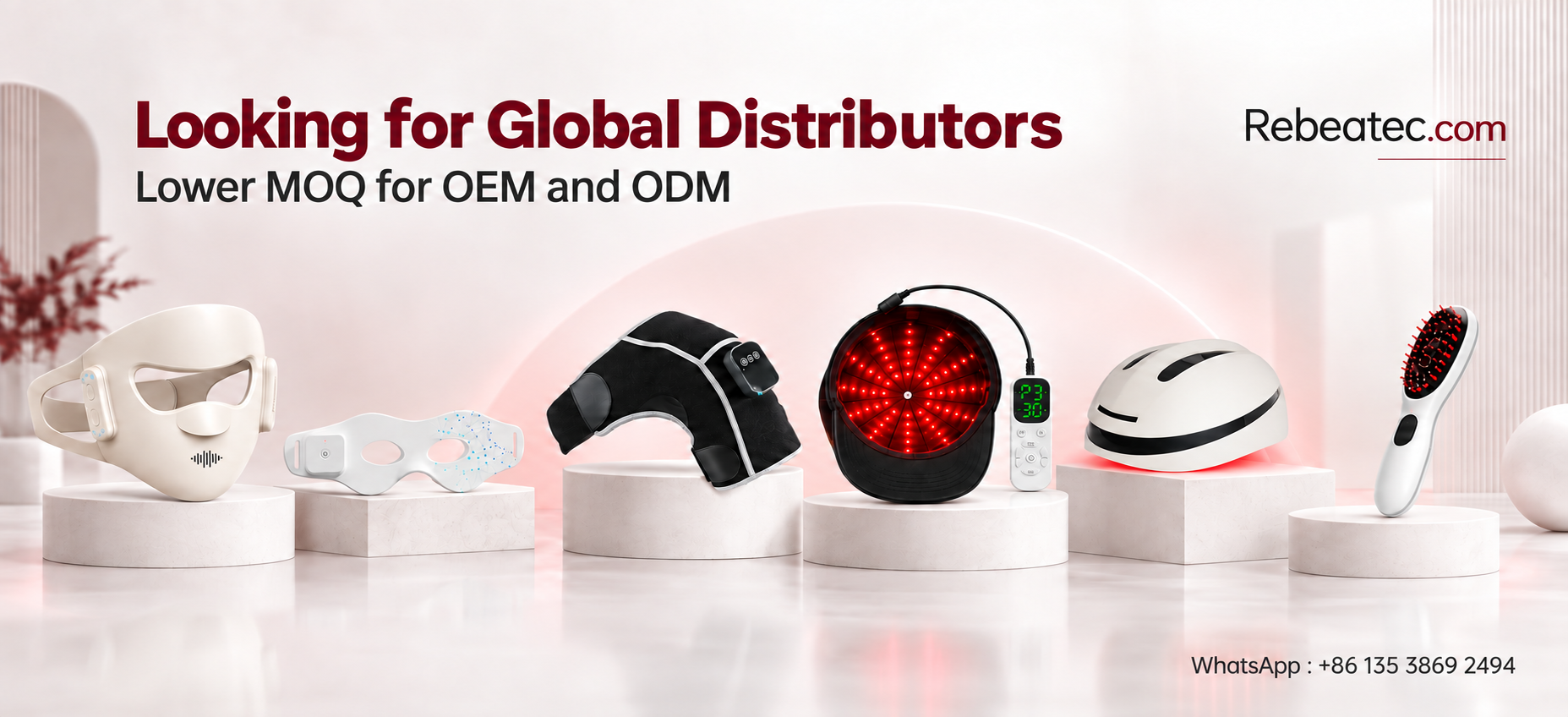
Rebeatec develops and supplies a range of consumer red light beauty and wellness products, including silicone LED face masks, red light hair caps and helmets, handheld devices and wearable red light products for different body areas.
For private-label brands, distributors and product developers, we support OEM and ODM projects covering product configuration, appearance, branding, packaging and selected specification customization.
Our product-development approach focuses on the complete user experience rather than one marketing specification alone.
For brands evaluating a new red light product, factors such as wavelength, LED layout, product structure, comfort and intended use should be considered together from the beginning of the project.
Looking for a red light therapy device manufacturer for your next private-label project? Contact Rebeatec to discuss OEM/ODM options, product customization and low-MOQ development opportunities.
Frequently Asked Questions
- What wavelength is commonly used in red light devices?
Red and near-infrared wavelengths are commonly used in consumer LED products. The appropriate configuration depends on the product design, intended use and device specifications rather than wavelength alone.
2.Is higher irradiance always better in a red light device?
Not necessarily. Irradiance should be considered together with treatment distance, LED distribution, coverage and session duration.
Does a higher LED count mean better coverage?
Not automatically. LED positioning, spacing, beam angle and the shape of the device can be as important as the total number of LEDs.
What should brands ask a red light therapy device manufacturer?
Brands should ask about wavelength, LED configuration, output parameters, materials, product testing, compliance documentation, customization options, packaging and quality-control processes.
Does Rebeatec support private-label red light devices?
Rebeatec supports OEM and ODM projects for selected red light beauty and wellness products, including customized branding, packaging and product configurations.
Disclaimer: This content is provided for general educational and product-development information. It is not medical advice and is not intended to diagnose, treat, cure or prevent any disease. Product specifications, regulatory classification and permitted claims should be evaluated separately for each finished product and target market.
