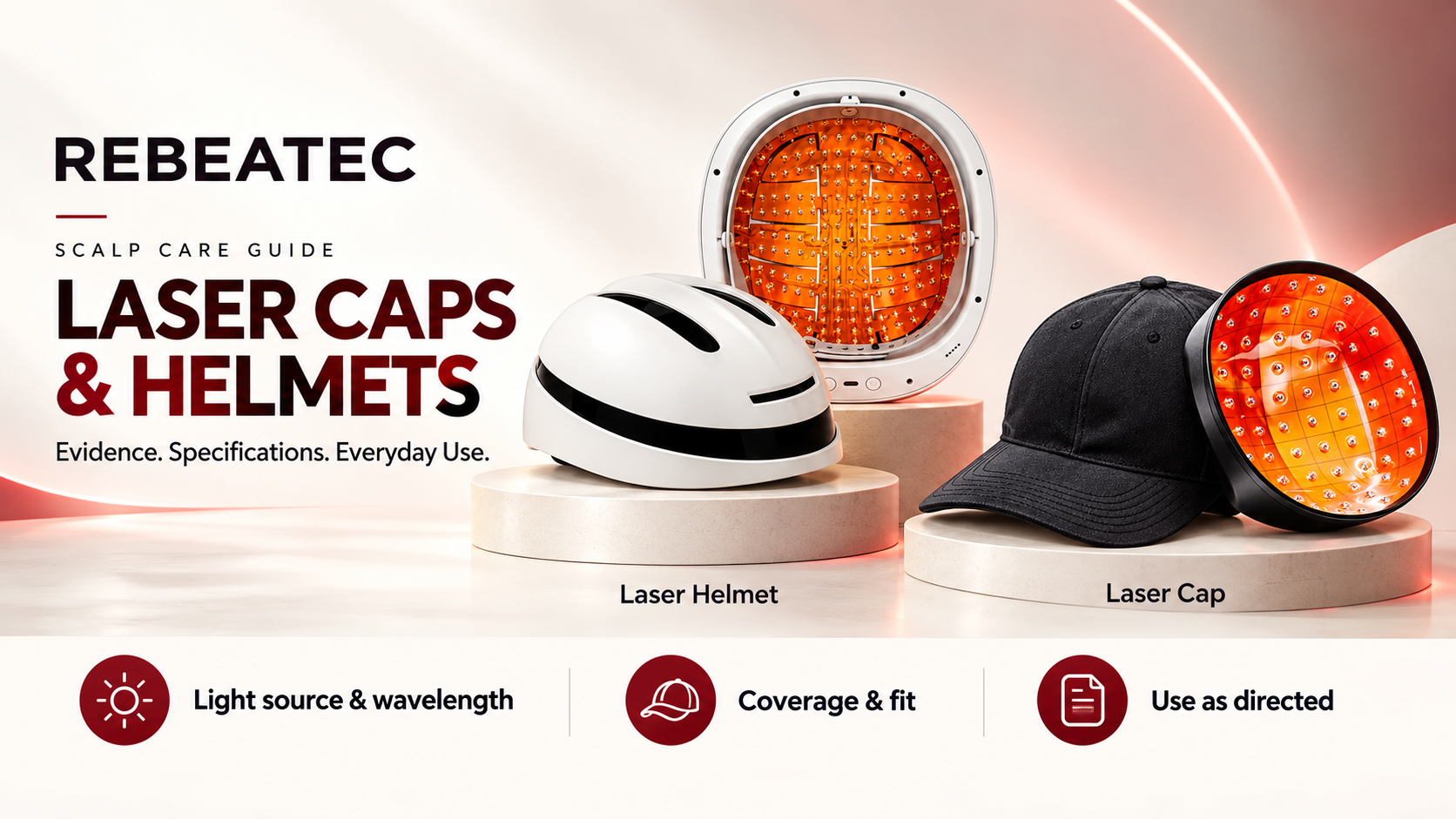
Do Laser Hair Caps Work? Evidence and Device Basics
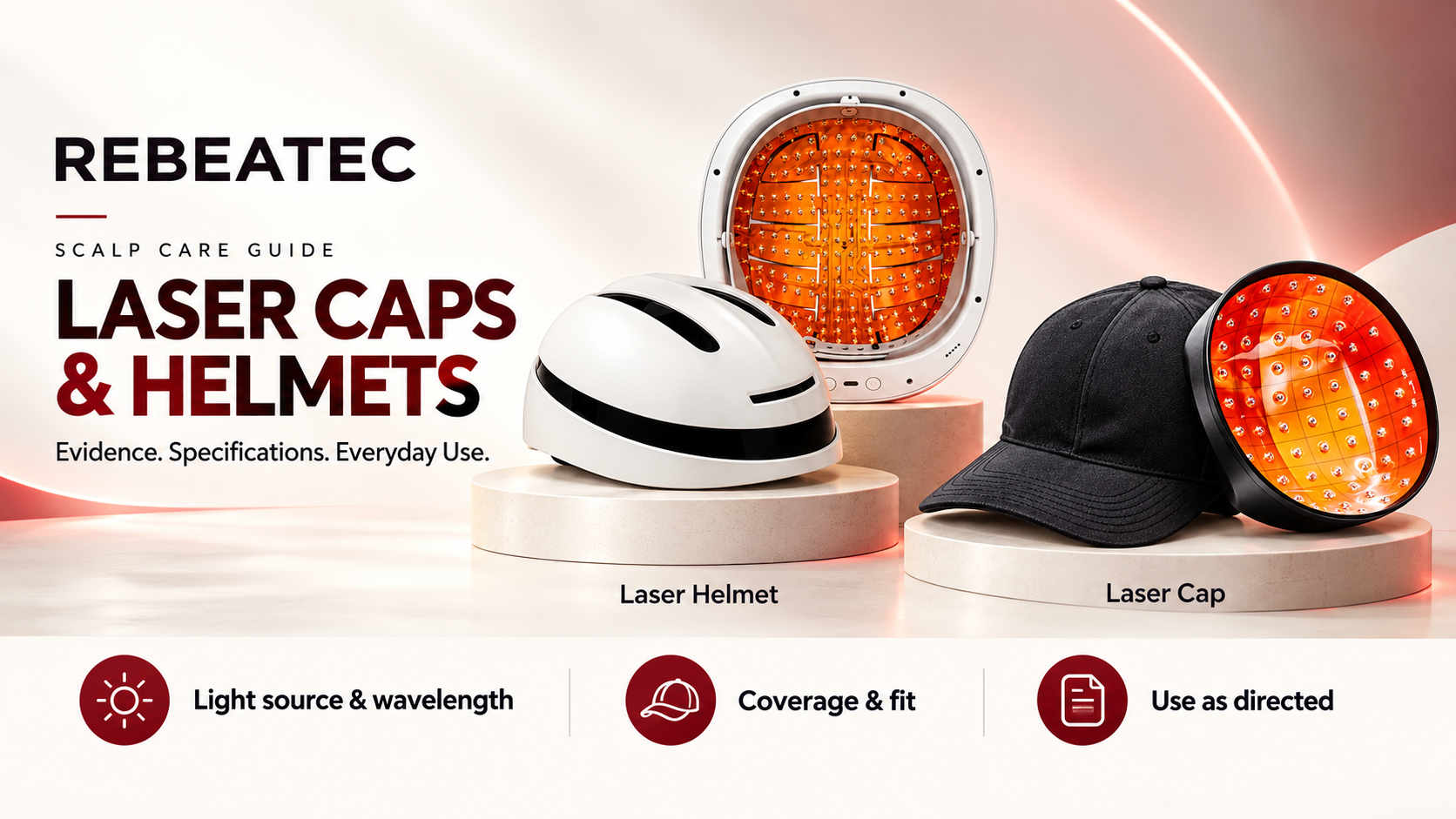
Laser hair caps attract attention because they offer a convenient way to use light-based devices at home. But do they work—and does a higher price or a larger number of laser diodes mean a better device?
The useful answer starts with two separate questions: what does the research show, and what evidence is available for the particular device you are considering?
This guide explains low-level laser terminology, the limits of the evidence, and the practical details worth checking before choosing a laser cap, helmet, or comb.
What Is a Low-Level Laser Hair Device?
Low-level laser hair devices use relatively low optical output. They differ from lasers designed to cut tissue or remove hair through heating.
In research, you may encounter the term low-level laser therapy, or LLLT. Related literature also uses “low-level light therapy” and “photobiomodulation,” or PBM.
These terms describe a broad area of light-based research. They do not mean that every red-light product has the same output, intended use, or supporting evidence.
Do Laser Hair Caps Have Scientific Support?
Some controlled studies have reported improvements in hair density in people with androgenetic alopecia, commonly called male or female pattern hair loss.
For example, a 2014 randomized, sham-controlled study of specific laser comb devices reported greater increases in terminal hair density in the active-device groups than in the sham groups over 26 weeks. The researchers also called for further investigation into long-term effects and maintenance.[1]
This supports a measured conclusion: certain studied devices may help some people with pattern hair loss. It does not establish that every laser cap works, that results are guaranteed, or that a device treats every cause of hair loss.
Research on one product should not be presented as clinical proof for another product.
Why the Cause of Hair Loss Matters
Hair thinning and shedding can have different causes. A photograph or the appearance of the scalp alone cannot reliably establish which condition is present.
Before choosing a device to address hair loss, seek a professional assessment—particularly when the loss is sudden, patchy, unexplained, or accompanied by scalp symptoms.[2]
Avoid promises that a cap can restore a full head of hair or reverse every stage of hair loss. A realistic discussion should explain who was studied, what was measured, and what remains uncertain.
Are Red LEDs and Red Lasers the Same?
Both can emit visible red light, but they are different light sources.
A product may contain laser diodes, LEDs, or a combination. The color of its glow does not tell you which source is inside or establish its optical performance.
When comparing devices, ask for a clear description of the light source. Do not assume that an LED scalp cap and a laser helmet are interchangeable because both appear red.
Likewise, a source technology label such as VCSEL does not, by itself, prove superior results.
Four Things to Check Beyond Diode Count
1. Optical specifications and measurement conditions
Check the wavelength, optical output, operating mode, and intended coverage.
Ask whether the stated output refers to individual diodes, the complete device, or measurements at the intended scalp position. Electrical input wattage is not the same as optical power delivered to a surface.
2. Coverage and fit
A cap or helmet should be evaluated in its intended wearing position. Hair, spacing, and device geometry are relevant considerations when assessing how light reaches the scalp.
Request an explanation of the coverage design and available measurements. A brightly illuminated product photograph cannot establish uniform scalp exposure.
3. Session controls and safety instructions
Check the specified session duration, operating modes, eye-safety guidance, and cleaning requirements.
If a device includes a timer or wear-detection feature, ask how it functions and what testing supports it. These features do not replace following the manual.
Do not increase the intensity, duration, or frequency beyond the supplied instructions.
4. Practical comfort and usability
Weight, fit, controller access, power supply, and cleaning all affect how easily a device fits into a routine.
Compare these practical details alongside technical specifications. A device that is inconvenient to use may be difficult to use consistently as instructed.
Laser Cap, Helmet, or Comb: What Is the Difference?
A laser cap offers a wearable format. A helmet provides a shaped housing, while a comb requires the user to position and move the device as directed.
The format alone does not establish effectiveness. Compare the exact model, instructions, supporting documentation, and intended use.
Frequently Asked Questions
Does a higher diode count mean better results?
Not by itself. Diode count does not replace optical measurements or evidence for the complete device.
Can I expect a visible change after a few sessions?
Short-term impressions are not a reliable way to judge hair-density changes. The study discussed above assessed outcomes over months, rather than days.[1]
Does research on laser combs prove that a laser helmet works?
No. The device design and study conditions matter. Evidence should be assessed for the specific product and claim.
Does FDA clearance apply to every product from a supplier?
No. Any regulatory claim should be checked against the exact model, intended use, and supporting documentation.
Comparing Rebeatec Scalp Care Devices
Rebeatec’s product range includes laser caps, helmets, and combs for customers exploring scalp care device options.
For a model comparison or wholesale inquiry, provide the intended market, preferred format, and documentation requirements. Request confirmed specifications for the exact configuration under discussion.
For brands and distributors, distinguish technical specifications from clinical claims. Wavelength, diode count, battery capacity, and timer functions describe a product; they do not independently prove a hair-growth outcome.
This article provides general educational information. It does not diagnose hair loss, guarantee results, or replace professional advice or the instructions supplied with a device.
References
[1] Jimenez JJ et al. Efficacy and safety of a low-level laser device in the treatment of male and female pattern hair loss: a multicenter, randomized, sham device-controlled, double-blind study.
[2] American Academy of Dermatology. Hair loss: Diagnosis and treatment.